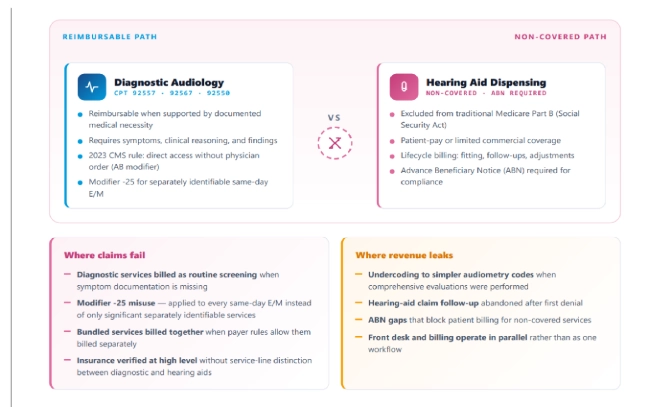
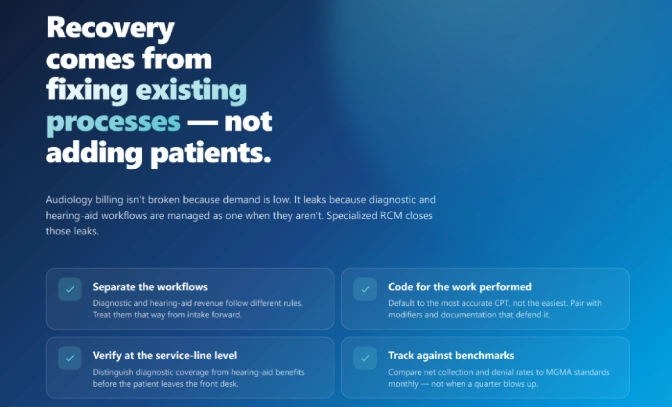
Audiology practices face increasing financial pressure due to coding complexity, payer variability, and the separation between diagnostic services and hearing aid revenue. While patient demand remains steady, reimbursement continues to lag due to billing inefficiencies, denied claims, and incomplete documentation.
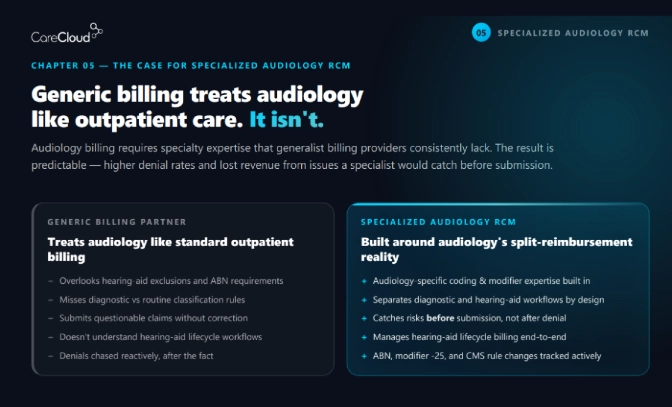
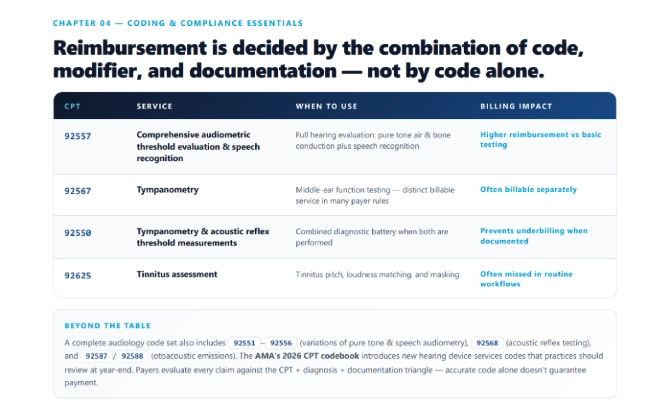
A lot of audiology practices depends on simplified billing workflows that are unable to capture the complete value of audiology services. This results in missed reimbursement opportunities, undercoding, and late payments that affect overall revenue performance.
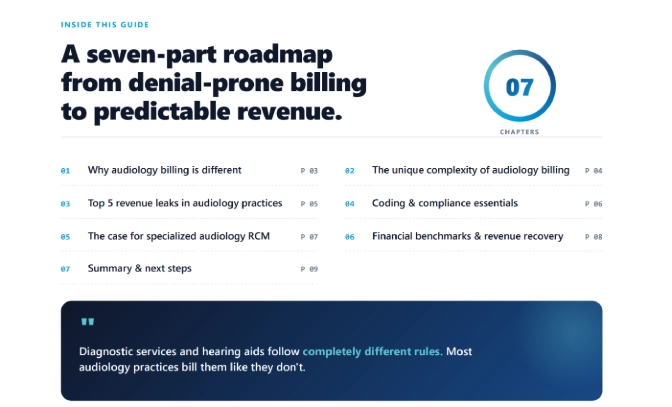
This eBook outlines how structured, audiology-specific revenue cycle management (RCM) helps practices recover lost revenue, reduce denials, and improve billing accuracy without increasing patient volume.
Audiology practices face increasing financial pressure due to coding complexity, payer variability, and the separation between diagnostic services and hearing aid revenue. While patient demand remains steady, reimbursement continues to lag due to billing inefficiencies, denied claims, and incomplete documentation.
A lot of audiology practices depends on simplified billing workflows that are unable to capture the complete value of audiology services. This results in missed reimbursement opportunities, undercoding, and late payments that affect overall revenue performance.
This eBook outlines how structured, audiology-specific revenue cycle management (RCM) helps practices recover lost revenue, reduce denials, and improve billing accuracy without increasing patient volume.
We’re Here to Help
Our experts are ready to assist
you in real-time.